

| Model | Cylinder arrangement and number | Engine capacity (cc) | Rated output (kW at rpm)[1] | Top speed (km/h) | Fuel consumption combined (l/100 km)[2] | CO2 emissions combined (g/km)[2] | |
|---|---|---|---|---|---|---|---|
| E 200 CDI | I4 | 2143 | 100/2800–4600 (100/2800–4600) | 205 (203) | 5.4–5.2 (5.4–5.3) | 141–135 (141–137) | |
| E 220 CDI | I4 | 2143 | 125/3000–4200 (125/3000–4200) | 220 (216) | 5.2–5.0 (5.4–5.2) | 135–132 (142–134) | |
| E 250 CDI | I4 | 2143 | 150/3800 (150/3800) | 232 (232) | 5.3–5.1 (5.5–5.2) | 138–134 (145–136) | |
| E 250 CDI 4MATIC | I4 | 2143 | – (150/3800) | – (230) | – (5.9–5.8) | – (155–152) | |
| E 300 BlueTEC | V6 | 2987 | – (170/3800) | – (240) | – (6.2–5.7) | – (162–152) | |
| E 350 BlueTEC | V6 | 2987 | – (185/3600) | – (245) | – (6.2–5.7) | – (162–152) | |
| E 350 BlueTEC 4MATIC | V6 | 2987 | – (185/3600) | – (240) | – (6.5–6.4) | – (173–170) |
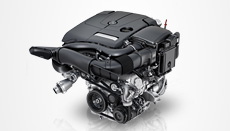
Maximum power and smoothness of operation with minimal fuel consumption
Figures in brackets apply to vehicles with automatic transmission
[1] Figures for rated output and rated torque in accordance with Directive 80/1269/EEC in the currently applicable version.
[2] The figures shown for fuel consumption and CO2 emissions were obtained in accordance with the prescribed measuring process (Directive [EC] 715/2007 in its currently applicable version). The figures are not based on an individual vehicle and do not constitute part of the product offer; they are provided solely for purposes of comparison between different vehicle models.